Tire Exports from Asia Continue to Grow
The global tire industry is entering a new phase of growth. Market size is projected to increase from approximately US$175 billion in 2026 to more than US$260 billion by 2033. A key driver of this expansion is the continued rise of electric vehicles (EVs). Global electric car sales surpassed 20 million units in 2025, representing a 20% year-on-year increase. As a result, demand for EV-specific tires is expected to grow by more than 10% annually.
Asia Pacific remains the center of global tire manufacturing, accounting for approximately 43% of the worldwide tire market. China continues to lead in production and exports, shipping 6.63 million tons of rubber tires between January and August 2026.
Leading tire manufacturers are also expanding production capacity beyond China into Southeast Asian markets such as Vietnam, Thailand, Cambodia and Indonesia. These investments help secure access to natural rubber supplies, diversify manufacturing footprints, reduce exposure to trade barriers, and strengthen participation in rapidly growing markets across the Regional Comprehensive Economic Partnership (RCEP), Africa and Latin America.
While this shift creates significant opportunities, it also introduces greater complexity into global supply chains. Manufacturers are now managing transportation networks spanning multiple production origins, service providers and destination markets, making supply chain visibility and resilience increasingly critical.

What Makes Tire Supply Chains So Complex?
Tire manufacturers typically move high volumes of cargo across long-distance, multimodal transportation networks. As supply chains become more geographically diversified, several common challenges emerge:
-
Limited end-to-end visibility across carriers, freight forwarders and regions
-
Inconsistent data formats and standards across logistics partners
-
Port congestion and disruption that affect inventory and production planning
-
Slow or delayed exception response, turning small delays into costly disruptions
-
Rising pressure to balance service reliability with cost efficiency
For a manufacturer shipping across continents, even small visibility gaps can affect inventory availability, customer commitments and cost control.
How OOCL Logistics Helps Tire Manufacturers Turn Visibility into a Competitive Advantage
In today's operating environment, visibility is no longer simply about tracking shipments. Forward-looking manufacturers are increasingly seeking actionable insights that enable faster decision-making, proactive risk management and more resilient supply chain operations.
To address these requirements, logistics providers must be able to consolidate data across multiple stakeholders, standardize information from different systems and deliver meaningful intelligence that supports operational decisions.
A recent collaboration between OOCL Logistics and one of China's leading tire manufacturers demonstrates how this approach can help address growing supply chain complexity.
The tire manufacturer operates production facilities across China and Southeast Asia and serves customers in more than 180 countries worldwide. As its international footprint expanded, maintaining consistent visibility across multiple carriers and trade lanes became increasingly challenging.
One of the customer's key challenges was the lack of standardized shipment information across different shipping lines. Variations in EDI structures, milestone definitions and update frequencies made it difficult to establish a single, reliable view of cargo movements.
Using the OOCL Logistics PODIUM® platform, data from multiple carriers was standardized and consolidated into a unified information stream. This enabled the customer to access a consistent view of shipment status regardless of the carrier used.
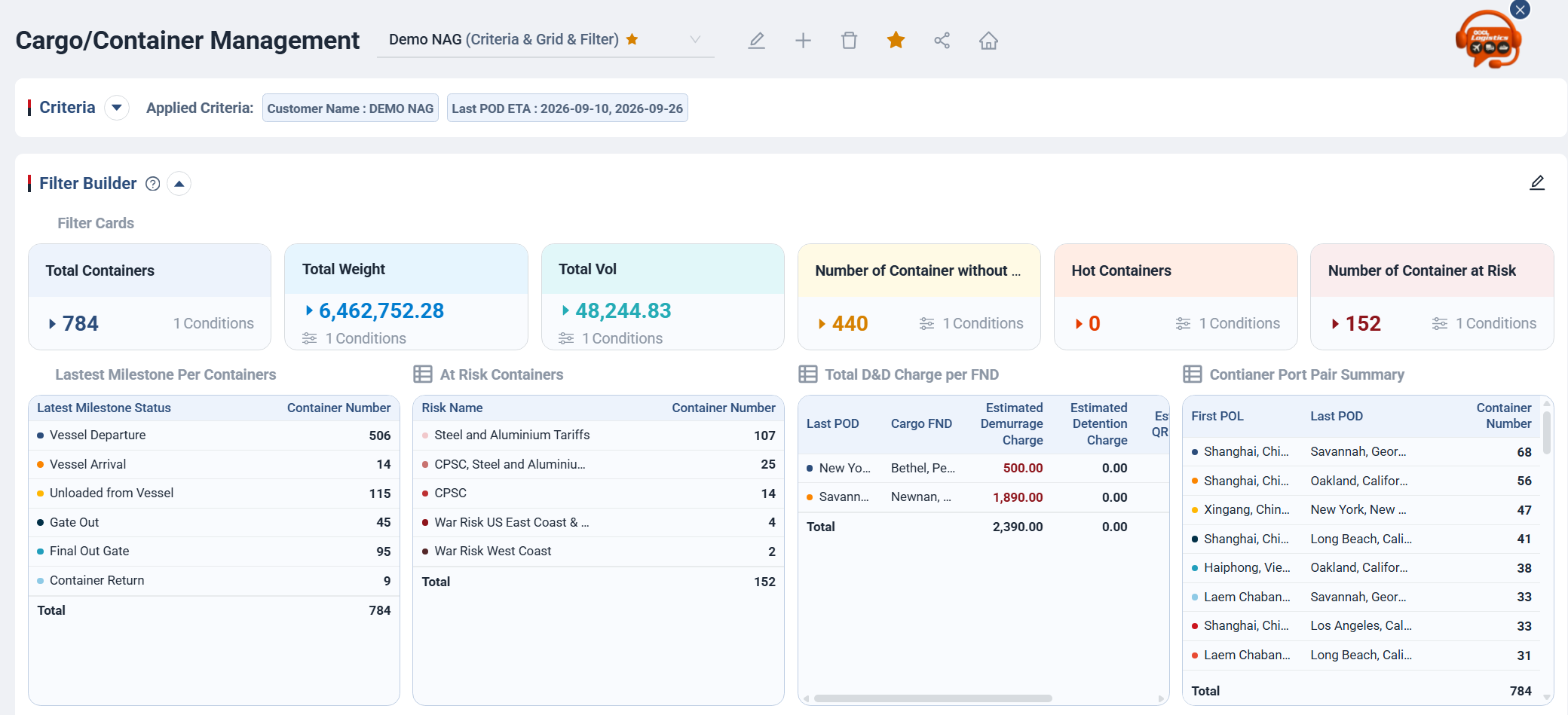
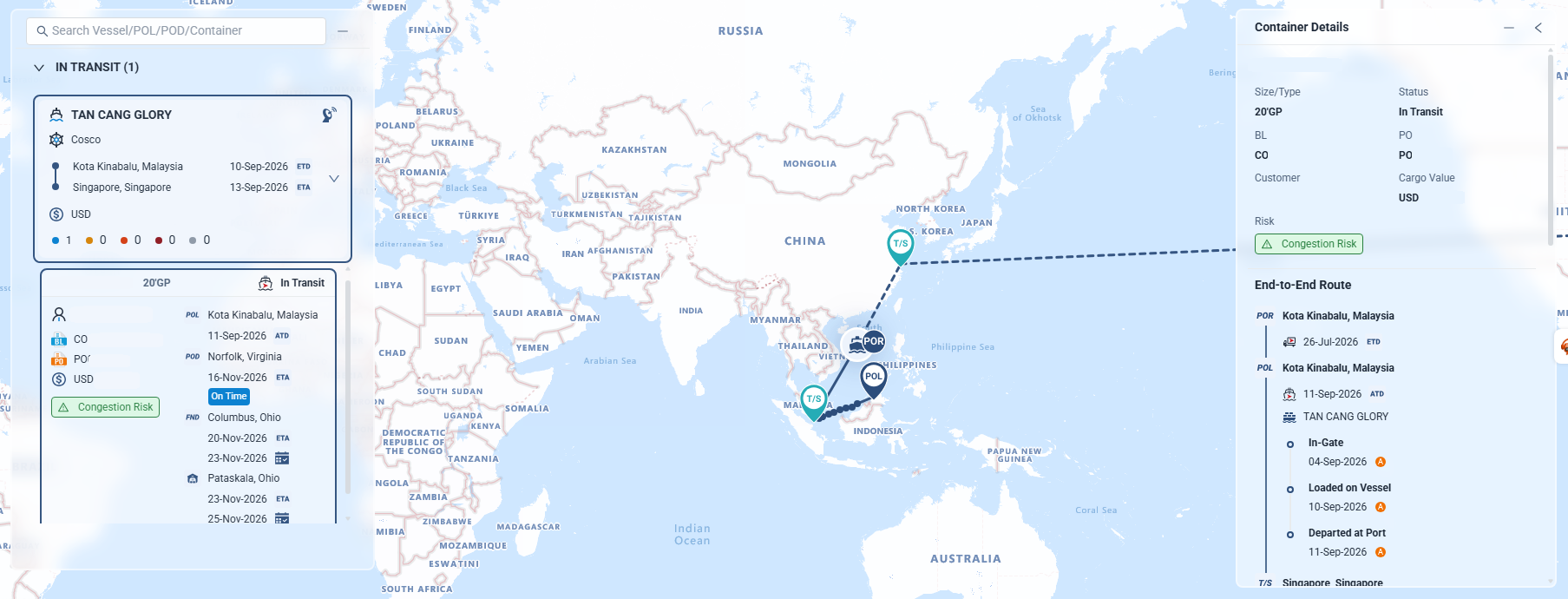
Beyond visibility, the platform combines AIS vessel-tracking data with AI-powered validation to improve estimated arrival times. Customer-specific operating procedures are incorporated into the system, allowing potential issues to be identified automatically at predefined milestones and enabling earlier intervention when disruptions occur.
As the manufacturer's network expanded, OOCL Logistics also supported operations across multiple origins, including China and Vietnam, while maintaining consistent booking management, customs clearance and last-mile delivery services across key destination markets such as the United Kingdom, Belgium and Germany.
Strengthening Visibility, Agility and Resilience
- A single, trusted view of shipment status across multiple carriers
- Greater data consistency and visibility across global logistics operations
- Faster response to disruptions and shipment exceptions
- Better support for international expansion through standardized operating procedures
- More reliable shipment information for planning and decision-making
- Higher confidence in managing complex multi-origin, multi-destination transportation networks
- Enhanced supply chain resilience in an increasingly complex global operating environment
- Increased agility in supporting future growth and evolving market requirements
Ultimately, the solution provided the customer with a single, trusted view of global shipment activity across multiple carriers and regions, strengthening visibility, improving coordination and supporting more informed supply chain decisions through a more proactive and data-driven approach.
Building Future-Ready Tire Supply Chains
As tire manufacturers continue expanding production networks and serving increasingly diverse markets, supply chain visibility will become an even more important source of competitive advantage.
The role of logistics providers is also evolving. Beyond moving cargo, organizations are increasingly expected to integrate data across multiple service providers, identify potential issues before they escalate and transform shipment information into actionable business intelligence.
For tire manufacturers navigating a fast-growing yet increasingly complex global market, combining visibility, resilience and agility will be essential to anticipating disruptions, responding quickly and making informed decisions that support sustainable growth and long-term competitiveness.
Reference
1. Persistence Market Research, “Automotive Tire Market Size, Share & Trends Report, 2033,” January 2026.
https://www.persistencemarketresearch.com/market-research/automotive-tire-market.asp
2. International Energy Agency, “Trends in Electric Cars,” Global EV Outlook 2026.
https://www.iea.org/reports/global-ev-outlook-2026/trends-in-electric-cars
3. General Administration of Customs of the People’s Republic of China
